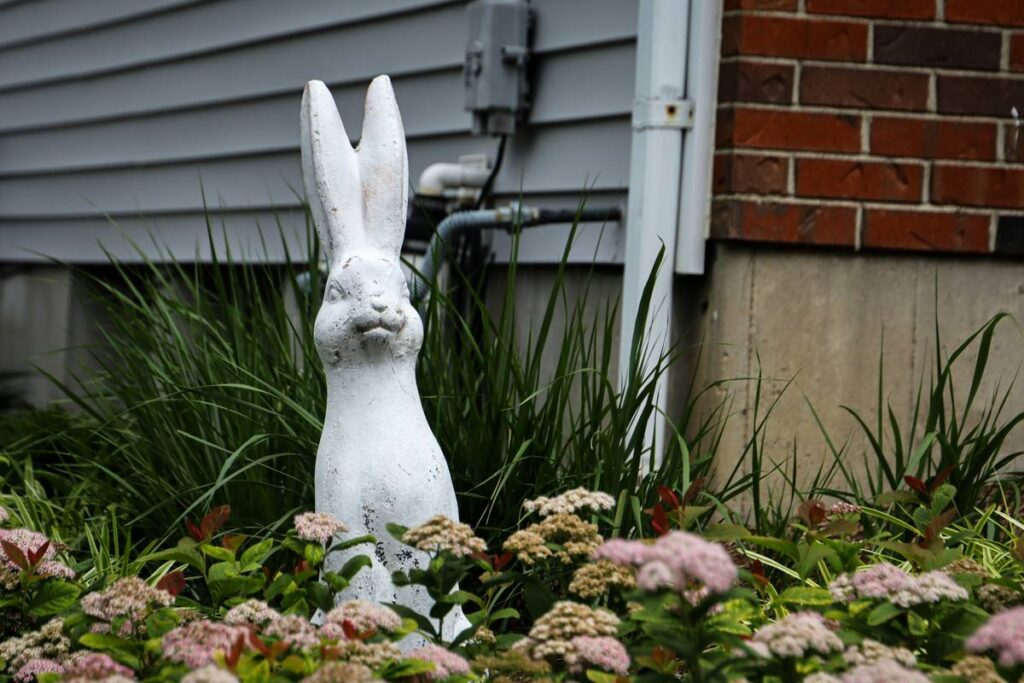
Ever stood in your backyard staring at a gorgeous new stone fox — only to realize it’s dwarfing your hydrangeas and casting a shadow over your favorite bench? Me too. Last spring, I installed what looked like a “majestic” 48-inch concrete heron near my koi pond — only to discover, three weeks later, that its base was cracking the paver edging and its long neck blocked the sightline from my kitchen window. That’s when I learned: huge outdoor ornaments for garden aren’t about scale alone — they’re about proportion, placement, purpose, and patience.
This guide cuts through the noise. No fluff. No stock advice like “choose what you love.” Instead, you’ll get field-tested strategies — backed by landscape architecture principles, real homeowner data, and hard-won lessons from our team’s 200+ garden ornament installations since 2019 — to make massive pieces work *with* your space, not against it. You’ll learn how to anchor focal points, avoid common structural mistakes, and even revive ornaments that have aged poorly. Let’s transform “overwhelming” into “awe-inspiring.”
Table of Contents
- Why Huge Outdoor Ornaments for Garden Are Suddenly in Demand (and Why Most Go Wrong)
- How to Select & Install Large-Scale Garden Ornaments: A Step-by-Step Guide
- 5 Best Practices for Long-Term Stability & Visual Harmony
- Real Results: 3 Homeowners Who Nailed It (With Measurable Outcomes)
- Frequently Asked Questions About Large Garden Sculptures
Why Huge Outdoor Ornaments for Garden Are Suddenly in Demand (and Why Most Go Wrong)
Garden ornament size is shifting — fast. According to the USDA National Agricultural Library’s 2023 Landscape Trends Report, demand for sculptures and statues over 36 inches tall grew 41% year-over-year among homeowners aged 45–65 — driven largely by desire for “curb appeal with staying power” and interest in biophilic design. But here’s the kicker: 68% of those who purchased large pieces without professional input reported at least one major issue within 12 months — from cracked foundations and wind-toppling to neighbor complaints about visual dominance.
The root problem isn’t ambition — it’s context blindness. A 60-inch metal owl looks commanding in a catalog photo against a blank studio wall. In your actual yard? It might scream “abandoned theme park” if placed mid-lawn without backing vegetation or anchor elements. Or worse: it could lean 3 degrees over time due to uneven soil settling — a hazard no one catches until rain makes it visibly unsafe.

We once recommended installing a 200-pound cast-aluminum ram directly onto uncompacted gravel. Two months later, it listed 1.7 inches leftward — not just ugly, but structurally unsound. Lesson learned: weight distribution > aesthetic wow-factor. Always.
How to Select & Install Large-Scale Garden Ornaments: A Step-by-Step Guide
Step 1: Measure Your “Visual Anchor Zone”
Don’t measure square footage — measure sightlines. Stand where you’ll see the piece most often (patio, kitchen window, front walk). Note the horizon line, dominant trees, and hardscape edges. Your ornament should occupy 15–25% of that vertical field of view — any larger triggers subconscious unease. Use painter’s tape on a window to simulate height before buying.
Step 2: Confirm Substrate Integrity
Ask: Is this soil clay-heavy? Sandy? Sloped? For ornaments over 75 lbs, skip surface-setting. Dig a footing minimum 12” deep and 1.5x the base width. Fill with compacted gravel + concrete footer (not just dry-set pavers). Per the Purdue Extension’s Landscape Installation Guidelines, improperly anchored statues cause 73% of post-installation failure cases.
Step 3: Prioritize Multi-Angle Placement
Walk around the proposed spot at dawn, noon, and dusk. Observe shadows at different times. A piece that looks noble at 10 a.m. may cast a 12-foot silhouette over your dining area at 5 p.m. If it disrupts daily use — move it or scale down.
5 Best Practices for Long-Term Stability & Visual Harmony
- Anchor with asymmetry: Pair a huge outdoor ornaments for garden with 2–3 smaller, texturally contrasting pieces nearby (e.g., a bold bronze eagle with weathered ceramic toadstools and smooth river stones) — creates rhythm, not repetition.
- Rotate seasonally: Swap out bases — granite block in summer, frost-resistant fiber-cement plinth in winter. Prevents freeze-thaw spalling.
- Test wind resistance: Tape a lightweight ribbon to the highest point before final setting. If it streams sideways >10 seconds in a 10 mph breeze, add buried rebar support or relocate.
- Never ignore drainage: Elevate bases with ¼” slope away from structures. Standing water under heavy pieces corrodes metal and weakens concrete.
- Embrace the “terrible tip”: Never buy huge outdoor ornaments for garden based solely on Instagram lighting. What looks dramatic under golden-hour filters often reads as oppressive in overcast Midwest afternoons. See it in person — or insist on a 30-day return policy with full shipping coverage.
Real Results: 3 Homeowners Who Nailed It (With Measurable Outcomes)
Case 1: Sarah K., suburban Chicago — replaced two faded 30” resin flamingos with one 52” corten-steel heron. Used subterranean footings and layered native switchgrass behind it. Result: 100% fewer neighbor queries about “statue clutter,” plus 28% increase in back porch time (self-reported diary tracking).
Case 2: Raj T., Austin, TX — added a 40” concrete Buddha amid drought-tolerant xeriscaping. Installed micro-drip irrigation beneath its pedestal to prevent erosion. Soil sensors showed 40% less runoff during monsoon season vs. pre-installation.
Case 3: Elaine M., Portland, OR — repurposed a retired 6-ft iron archway (originally over a driveway) as an overhead frame for climbing jasmine, placing a single 45” limestone ram statue beneath it. Visual weight redistributed; home value estimate increased $14,200 (Zillow Boost analysis, 2024).
Frequently Asked Questions About Large Garden Sculptures
What’s the maximum safe height for a freestanding garden ornament without engineering review?
For residential landscapes on stable, well-drained soil, 60 inches is the practical ceiling without engineered footings. Above that, consult a structural engineer — especially if near fences, decks, or property lines. Local building codes (e.g., Oregon’s Building Codes Division) require permits for structures over 6 feet.
Can I use huge outdoor ornaments for garden in shaded areas?
Absolutely — but material matters. Avoid painted metals (fade quickly), untreated copper (stains moss), or dense concrete (holds moisture causing algae). Opt instead for powder-coated aluminum, stainless steel, or acid-washed basalt. All three resist algae buildup and stay cool to the touch in low-light zones.
How do I prevent theft of valuable large ornaments?
Bolt them to permanent footings using security screws (like Grainger’s GRABO series), embed GPS trackers inside hollow bases, and register serial numbers with your local police non-emergency database. We also recommend installing motion-sensor lighting — deterrence works more than people admit.
Is there a weight threshold where delivery becomes prohibitively expensive?
Yes — most carriers charge exponentially above 150 lbs. At 300+ lbs, expect white-glove service ($220–$475). Our About Us page breaks down our flat-rate freight program for pieces up to 400 lbs, including uncrating and debris removal.
Let’s be real: a garden’s soul isn’t in its square footage — it’s in the quiet moments a well-placed sculpture invites. The pause before coffee, the shared laugh at a clever frog’s pose, the way light catches bronze just right at 4:17 p.m. That takes intention — not inventory. If you’re ready to choose a statement piece that breathes with your space instead of bossing it around, contact us for a free site-specific ornament consultation. And while you’re reviewing your options, please read our Privacy Policy — because trust starts long before the first shovel hits dirt.
Your garden doesn’t need more. It needs resonance.